
What Is Strength and Conditioning? Why Athletes Need Strength and Conditioning Training
What Is Strength and Conditioning? Why Athletes Need Strength and Conditioning Training
What Is Strength and Conditioning? Why Athletes Need Strength and Conditioning Training
Athletic performance is about much more than talent and practice. Whether you're a professional athlete, an amateur competitor, or a fitness enthusiast, your body needs strength, power, endurance, mobility, and resilience to perform at its best. This is where strength and conditioning training becomes essential. Strength and conditioning (S&C) is a specialized approach to physical training designed to improve athletic performance, reduce injury risk, and enhance overall physical capabilities. Unlike traditional gym workouts that primarily focus on muscle growth or weight loss, strength and conditioning programs are tailored to help athletes move better, perform better, and recover more effectively. As sports become increasingly competitive, athletes are recognizing that success depends not only on technical skills but also on physical preparedness. From football and cricket to tennis, running, and combat sports, strength and conditioning has become a critical component of modern athletic development.
Athletic performance is about much more than talent and practice. Whether you're a professional athlete, an amateur competitor, or a fitness enthusiast, your body needs strength, power, endurance, mobility, and resilience to perform at its best. This is where strength and conditioning training becomes essential. Strength and conditioning (S&C) is a specialized approach to physical training designed to improve athletic performance, reduce injury risk, and enhance overall physical capabilities. Unlike traditional gym workouts that primarily focus on muscle growth or weight loss, strength and conditioning programs are tailored to help athletes move better, perform better, and recover more effectively. As sports become increasingly competitive, athletes are recognizing that success depends not only on technical skills but also on physical preparedness. From football and cricket to tennis, running, and combat sports, strength and conditioning has become a critical component of modern athletic development.
Athletic performance is about much more than talent and practice. Whether you're a professional athlete, an amateur competitor, or a fitness enthusiast, your body needs strength, power, endurance, mobility, and resilience to perform at its best. This is where strength and conditioning training becomes essential. Strength and conditioning (S&C) is a specialized approach to physical training designed to improve athletic performance, reduce injury risk, and enhance overall physical capabilities. Unlike traditional gym workouts that primarily focus on muscle growth or weight loss, strength and conditioning programs are tailored to help athletes move better, perform better, and recover more effectively. As sports become increasingly competitive, athletes are recognizing that success depends not only on technical skills but also on physical preparedness. From football and cricket to tennis, running, and combat sports, strength and conditioning has become a critical component of modern athletic development.
2026-07-05
2026-07-05
What Is Strength and Conditioning?
Strength and conditioning is the science of improving physical performance through structured exercise programs. It combines strength training, cardiovascular conditioning, mobility work, agility drills, power development, and injury prevention strategies into a comprehensive system.
The primary goal of strength and conditioning is to help athletes develop the physical qualities required for their specific sport. For example, a sprinter needs explosive power and speed, while a long-distance runner requires endurance and efficient movement mechanics.
A well-designed strength and conditioning program focuses on:
Building muscular strength
Increasing power and explosiveness
Improving endurance
Enhancing flexibility and mobility
Developing balance and coordination
Supporting injury prevention
Optimizing recovery
Many athletes work alongside specialists who perform a detailed movement assessment to identify weaknesses, asymmetries, and areas for improvement before designing a personalized program.
Why Strength and Conditioning Is Important for Athletes
Athletes place significant demands on their bodies during training and competition. Repeated sprinting, jumping, changing direction, lifting, and absorbing impact can place tremendous stress on muscles, tendons, ligaments, and joints.
Without adequate physical preparation, athletes become more vulnerable to fatigue, reduced performance, and injuries.
Strength and conditioning provides a foundation that supports both performance and durability. It helps athletes generate more force, maintain proper movement patterns, and recover more efficiently between training sessions.
This is one reason many sports professionals integrate strength and conditioning alongside sports physiotherapy Bangalore programs to create a complete performance and injury prevention strategy.
The Key Components of Strength and Conditioning Training
1. Strength Development
Strength is the ability of muscles to generate force against resistance. Increased strength allows athletes to run faster, jump higher, and perform more efficiently.
Common strength exercises include:
Squats
Deadlifts
Lunges
Bench presses
Pull-ups
Rows
Strength training also improves joint stability, which plays an important role in reducing injury risk.
2. Power Training
Power combines strength with speed. Athletes need power to accelerate quickly, change direction, jump, throw, or strike effectively.
Power-focused exercises often include:
Plyometric training
Olympic lifts
Medicine ball throws
Sprint drills
Explosive jumps
Power development is particularly important for athletes participating in football, basketball, cricket, athletics, and racket sports.
3. Endurance Conditioning
Endurance training improves the body's ability to sustain activity over longer periods.
Conditioning programs may include:
Running intervals
Cycling
Rowing
Circuit training
Sport-specific conditioning drills
Better endurance allows athletes to maintain performance levels throughout training sessions and competitions.
4. Mobility and Flexibility
Restricted movement can limit performance and increase injury risk.
Mobility training focuses on improving joint movement while flexibility exercises target muscle length and tissue quality.
Athletes who combine mobility work with posture correction strategies often experience improved movement efficiency and reduced physical strain.
5. Agility and Coordination
Many sports require rapid changes in direction, balance, and body control.
Agility training improves:
Reaction speed
Coordination
Balance
Body awareness
Athletic movement efficiency
Improved agility can make a significant difference in competitive performance.
How Strength and Conditioning Helps Prevent Sports Injuries
One of the greatest benefits of strength and conditioning is injury prevention.
Athletes frequently suffer injuries due to:
Muscle imbalances
Poor movement mechanics
Weak stabilizing muscles
Inadequate recovery
Overtraining
A structured training program addresses these issues before they become serious problems.
This is why strength and conditioning is often integrated with sports injury rehabilitation Bangalore programs. Once an athlete recovers from an injury, targeted strength training helps restore function and reduce the likelihood of future injuries.
Research consistently shows that athletes with better strength, mobility, and movement quality often experience lower injury rates than those who neglect physical preparation.
The Role of Movement Assessment in Athletic Performance
Every athlete moves differently. Two athletes competing in the same sport may have entirely different strengths, weaknesses, and movement patterns.
A professional movement assessment evaluates:
Assessment Area | Purpose |
Mobility | Identifies joint restrictions |
Strength | Detects muscular weaknesses |
Stability | Evaluates body control |
Balance | Assesses coordination |
Posture | Identifies alignment issues |
Movement Mechanics | Detects injury risk factors |
These assessments help coaches and physiotherapists create individualized training programs that address specific needs.
Athletes searching for a physiotherapist near me often benefit from movement assessments that reveal performance limitations before they become injuries.
Strength and Conditioning vs Traditional Gym Training
Many people assume that strength and conditioning is simply lifting weights in a gym. While resistance training is one component, strength and conditioning is much broader and more strategic.
Traditional Gym Training | Strength & Conditioning |
General fitness focus | Sport-specific focus |
Muscle growth emphasis | Performance enhancement |
Standardized workouts | Individualized programs |
Aesthetic goals | Functional athletic goals |
Limited movement analysis | Includes movement assessment |
Strength and conditioning programs are designed to improve athletic performance rather than simply increase muscle size.
The Connection Between Physiotherapy and Strength & Conditioning
Modern sports performance increasingly combines physiotherapy and strength training.
Physiotherapy helps identify movement dysfunctions, mobility restrictions, and injury-related limitations. Strength and conditioning then builds the physical qualities necessary for long-term success.
Athletes receiving sports injury treatment often transition from rehabilitation into performance-focused strength and conditioning programs.
This integrated approach helps:
Restore movement quality
Improve athletic performance
Prevent recurring injuries
Enhance recovery capacity
Support long-term athletic development
Many athletes seeking physiotherapy Bangalore services use strength and conditioning as part of their overall performance strategy.
Who Can Benefit from Strength and Conditioning?
Although often associated with elite athletes, strength and conditioning benefits a wide range of individuals.
These include:
Professional athletes
Amateur competitors
Recreational sports participants
Runners
Cyclists
Tennis players
Cricket players
Football players
Fitness enthusiasts
Even individuals recovering from conditions commonly addressed through back pain physiotherapy, neck pain physiotherapy, or knee pain physiotherapy may benefit from appropriately designed strength-based rehabilitation programs.
The key is ensuring that training is individualized and aligned with the person's goals and physical condition.
Common Myths About Strength and Conditioning
Myth 1: It's Only for Professional Athletes
Strength and conditioning benefits athletes at all levels, from beginners to elite performers.
Myth 2: It Will Make You Bulky
Most athletic programs focus on performance, mobility, and power rather than excessive muscle growth.
Myth 3: Cardio Is Enough
While cardiovascular fitness is important, strength, mobility, and stability are equally essential for athletic success.
Myth 4: Injury Recovery Ends When Pain Stops
True recovery requires restoring strength, mobility, and function—not just eliminating pain.
Conclusion
Strength and conditioning is far more than a workout program. It is a science-based approach to improving athletic performance, preventing injuries, and developing long-term physical resilience. By combining strength training, power development, endurance conditioning, mobility work, and movement assessment, athletes can optimize performance while reducing injury risk.
Whether you're a professional competitor or a recreational athlete, strength and conditioning can help you move better, perform better, and recover more effectively. When combined with expert physiotherapy and sports rehabilitation strategies, it becomes a powerful tool for achieving sustainable athletic success.
For athletes seeking improved performance, injury prevention, and long-term physical development, strength and conditioning remains one of the most valuable investments in their sporting journey.
FAQs
1. What is strength and conditioning training?
Strength and conditioning is a structured training approach designed to improve strength, power, endurance, mobility, and athletic performance.
2. Is strength and conditioning only for athletes?
No. Recreational athletes, fitness enthusiasts, and individuals recovering from injuries can also benefit from strength and conditioning programs.
3. How does strength and conditioning prevent injuries?
It improves muscular strength, movement quality, joint stability, and physical resilience, reducing injury risk.
4. What is the role of movement assessment in strength training?
A movement assessment identifies weaknesses, imbalances, and movement limitations that can affect performance and increase injury risk.
5. Can strength and conditioning improve sports performance?
Yes. It helps athletes develop speed, power, endurance, agility, and overall physical capacity for better performance.
What Is Strength and Conditioning?
Strength and conditioning is the science of improving physical performance through structured exercise programs. It combines strength training, cardiovascular conditioning, mobility work, agility drills, power development, and injury prevention strategies into a comprehensive system.
The primary goal of strength and conditioning is to help athletes develop the physical qualities required for their specific sport. For example, a sprinter needs explosive power and speed, while a long-distance runner requires endurance and efficient movement mechanics.
A well-designed strength and conditioning program focuses on:
Building muscular strength
Increasing power and explosiveness
Improving endurance
Enhancing flexibility and mobility
Developing balance and coordination
Supporting injury prevention
Optimizing recovery
Many athletes work alongside specialists who perform a detailed movement assessment to identify weaknesses, asymmetries, and areas for improvement before designing a personalized program.
Why Strength and Conditioning Is Important for Athletes
Athletes place significant demands on their bodies during training and competition. Repeated sprinting, jumping, changing direction, lifting, and absorbing impact can place tremendous stress on muscles, tendons, ligaments, and joints.
Without adequate physical preparation, athletes become more vulnerable to fatigue, reduced performance, and injuries.
Strength and conditioning provides a foundation that supports both performance and durability. It helps athletes generate more force, maintain proper movement patterns, and recover more efficiently between training sessions.
This is one reason many sports professionals integrate strength and conditioning alongside sports physiotherapy Bangalore programs to create a complete performance and injury prevention strategy.
The Key Components of Strength and Conditioning Training
1. Strength Development
Strength is the ability of muscles to generate force against resistance. Increased strength allows athletes to run faster, jump higher, and perform more efficiently.
Common strength exercises include:
Squats
Deadlifts
Lunges
Bench presses
Pull-ups
Rows
Strength training also improves joint stability, which plays an important role in reducing injury risk.
2. Power Training
Power combines strength with speed. Athletes need power to accelerate quickly, change direction, jump, throw, or strike effectively.
Power-focused exercises often include:
Plyometric training
Olympic lifts
Medicine ball throws
Sprint drills
Explosive jumps
Power development is particularly important for athletes participating in football, basketball, cricket, athletics, and racket sports.
3. Endurance Conditioning
Endurance training improves the body's ability to sustain activity over longer periods.
Conditioning programs may include:
Running intervals
Cycling
Rowing
Circuit training
Sport-specific conditioning drills
Better endurance allows athletes to maintain performance levels throughout training sessions and competitions.
4. Mobility and Flexibility
Restricted movement can limit performance and increase injury risk.
Mobility training focuses on improving joint movement while flexibility exercises target muscle length and tissue quality.
Athletes who combine mobility work with posture correction strategies often experience improved movement efficiency and reduced physical strain.
5. Agility and Coordination
Many sports require rapid changes in direction, balance, and body control.
Agility training improves:
Reaction speed
Coordination
Balance
Body awareness
Athletic movement efficiency
Improved agility can make a significant difference in competitive performance.
How Strength and Conditioning Helps Prevent Sports Injuries
One of the greatest benefits of strength and conditioning is injury prevention.
Athletes frequently suffer injuries due to:
Muscle imbalances
Poor movement mechanics
Weak stabilizing muscles
Inadequate recovery
Overtraining
A structured training program addresses these issues before they become serious problems.
This is why strength and conditioning is often integrated with sports injury rehabilitation Bangalore programs. Once an athlete recovers from an injury, targeted strength training helps restore function and reduce the likelihood of future injuries.
Research consistently shows that athletes with better strength, mobility, and movement quality often experience lower injury rates than those who neglect physical preparation.
The Role of Movement Assessment in Athletic Performance
Every athlete moves differently. Two athletes competing in the same sport may have entirely different strengths, weaknesses, and movement patterns.
A professional movement assessment evaluates:
Assessment Area | Purpose |
Mobility | Identifies joint restrictions |
Strength | Detects muscular weaknesses |
Stability | Evaluates body control |
Balance | Assesses coordination |
Posture | Identifies alignment issues |
Movement Mechanics | Detects injury risk factors |
These assessments help coaches and physiotherapists create individualized training programs that address specific needs.
Athletes searching for a physiotherapist near me often benefit from movement assessments that reveal performance limitations before they become injuries.
Strength and Conditioning vs Traditional Gym Training
Many people assume that strength and conditioning is simply lifting weights in a gym. While resistance training is one component, strength and conditioning is much broader and more strategic.
Traditional Gym Training | Strength & Conditioning |
General fitness focus | Sport-specific focus |
Muscle growth emphasis | Performance enhancement |
Standardized workouts | Individualized programs |
Aesthetic goals | Functional athletic goals |
Limited movement analysis | Includes movement assessment |
Strength and conditioning programs are designed to improve athletic performance rather than simply increase muscle size.
The Connection Between Physiotherapy and Strength & Conditioning
Modern sports performance increasingly combines physiotherapy and strength training.
Physiotherapy helps identify movement dysfunctions, mobility restrictions, and injury-related limitations. Strength and conditioning then builds the physical qualities necessary for long-term success.
Athletes receiving sports injury treatment often transition from rehabilitation into performance-focused strength and conditioning programs.
This integrated approach helps:
Restore movement quality
Improve athletic performance
Prevent recurring injuries
Enhance recovery capacity
Support long-term athletic development
Many athletes seeking physiotherapy Bangalore services use strength and conditioning as part of their overall performance strategy.
Who Can Benefit from Strength and Conditioning?
Although often associated with elite athletes, strength and conditioning benefits a wide range of individuals.
These include:
Professional athletes
Amateur competitors
Recreational sports participants
Runners
Cyclists
Tennis players
Cricket players
Football players
Fitness enthusiasts
Even individuals recovering from conditions commonly addressed through back pain physiotherapy, neck pain physiotherapy, or knee pain physiotherapy may benefit from appropriately designed strength-based rehabilitation programs.
The key is ensuring that training is individualized and aligned with the person's goals and physical condition.
Common Myths About Strength and Conditioning
Myth 1: It's Only for Professional Athletes
Strength and conditioning benefits athletes at all levels, from beginners to elite performers.
Myth 2: It Will Make You Bulky
Most athletic programs focus on performance, mobility, and power rather than excessive muscle growth.
Myth 3: Cardio Is Enough
While cardiovascular fitness is important, strength, mobility, and stability are equally essential for athletic success.
Myth 4: Injury Recovery Ends When Pain Stops
True recovery requires restoring strength, mobility, and function—not just eliminating pain.
Conclusion
Strength and conditioning is far more than a workout program. It is a science-based approach to improving athletic performance, preventing injuries, and developing long-term physical resilience. By combining strength training, power development, endurance conditioning, mobility work, and movement assessment, athletes can optimize performance while reducing injury risk.
Whether you're a professional competitor or a recreational athlete, strength and conditioning can help you move better, perform better, and recover more effectively. When combined with expert physiotherapy and sports rehabilitation strategies, it becomes a powerful tool for achieving sustainable athletic success.
For athletes seeking improved performance, injury prevention, and long-term physical development, strength and conditioning remains one of the most valuable investments in their sporting journey.
FAQs
1. What is strength and conditioning training?
Strength and conditioning is a structured training approach designed to improve strength, power, endurance, mobility, and athletic performance.
2. Is strength and conditioning only for athletes?
No. Recreational athletes, fitness enthusiasts, and individuals recovering from injuries can also benefit from strength and conditioning programs.
3. How does strength and conditioning prevent injuries?
It improves muscular strength, movement quality, joint stability, and physical resilience, reducing injury risk.
4. What is the role of movement assessment in strength training?
A movement assessment identifies weaknesses, imbalances, and movement limitations that can affect performance and increase injury risk.
5. Can strength and conditioning improve sports performance?
Yes. It helps athletes develop speed, power, endurance, agility, and overall physical capacity for better performance.
What Is Strength and Conditioning?
Strength and conditioning is the science of improving physical performance through structured exercise programs. It combines strength training, cardiovascular conditioning, mobility work, agility drills, power development, and injury prevention strategies into a comprehensive system.
The primary goal of strength and conditioning is to help athletes develop the physical qualities required for their specific sport. For example, a sprinter needs explosive power and speed, while a long-distance runner requires endurance and efficient movement mechanics.
A well-designed strength and conditioning program focuses on:
Building muscular strength
Increasing power and explosiveness
Improving endurance
Enhancing flexibility and mobility
Developing balance and coordination
Supporting injury prevention
Optimizing recovery
Many athletes work alongside specialists who perform a detailed movement assessment to identify weaknesses, asymmetries, and areas for improvement before designing a personalized program.
Why Strength and Conditioning Is Important for Athletes
Athletes place significant demands on their bodies during training and competition. Repeated sprinting, jumping, changing direction, lifting, and absorbing impact can place tremendous stress on muscles, tendons, ligaments, and joints.
Without adequate physical preparation, athletes become more vulnerable to fatigue, reduced performance, and injuries.
Strength and conditioning provides a foundation that supports both performance and durability. It helps athletes generate more force, maintain proper movement patterns, and recover more efficiently between training sessions.
This is one reason many sports professionals integrate strength and conditioning alongside sports physiotherapy Bangalore programs to create a complete performance and injury prevention strategy.
The Key Components of Strength and Conditioning Training
1. Strength Development
Strength is the ability of muscles to generate force against resistance. Increased strength allows athletes to run faster, jump higher, and perform more efficiently.
Common strength exercises include:
Squats
Deadlifts
Lunges
Bench presses
Pull-ups
Rows
Strength training also improves joint stability, which plays an important role in reducing injury risk.
2. Power Training
Power combines strength with speed. Athletes need power to accelerate quickly, change direction, jump, throw, or strike effectively.
Power-focused exercises often include:
Plyometric training
Olympic lifts
Medicine ball throws
Sprint drills
Explosive jumps
Power development is particularly important for athletes participating in football, basketball, cricket, athletics, and racket sports.
3. Endurance Conditioning
Endurance training improves the body's ability to sustain activity over longer periods.
Conditioning programs may include:
Running intervals
Cycling
Rowing
Circuit training
Sport-specific conditioning drills
Better endurance allows athletes to maintain performance levels throughout training sessions and competitions.
4. Mobility and Flexibility
Restricted movement can limit performance and increase injury risk.
Mobility training focuses on improving joint movement while flexibility exercises target muscle length and tissue quality.
Athletes who combine mobility work with posture correction strategies often experience improved movement efficiency and reduced physical strain.
5. Agility and Coordination
Many sports require rapid changes in direction, balance, and body control.
Agility training improves:
Reaction speed
Coordination
Balance
Body awareness
Athletic movement efficiency
Improved agility can make a significant difference in competitive performance.
How Strength and Conditioning Helps Prevent Sports Injuries
One of the greatest benefits of strength and conditioning is injury prevention.
Athletes frequently suffer injuries due to:
Muscle imbalances
Poor movement mechanics
Weak stabilizing muscles
Inadequate recovery
Overtraining
A structured training program addresses these issues before they become serious problems.
This is why strength and conditioning is often integrated with sports injury rehabilitation Bangalore programs. Once an athlete recovers from an injury, targeted strength training helps restore function and reduce the likelihood of future injuries.
Research consistently shows that athletes with better strength, mobility, and movement quality often experience lower injury rates than those who neglect physical preparation.
The Role of Movement Assessment in Athletic Performance
Every athlete moves differently. Two athletes competing in the same sport may have entirely different strengths, weaknesses, and movement patterns.
A professional movement assessment evaluates:
Assessment Area | Purpose |
Mobility | Identifies joint restrictions |
Strength | Detects muscular weaknesses |
Stability | Evaluates body control |
Balance | Assesses coordination |
Posture | Identifies alignment issues |
Movement Mechanics | Detects injury risk factors |
These assessments help coaches and physiotherapists create individualized training programs that address specific needs.
Athletes searching for a physiotherapist near me often benefit from movement assessments that reveal performance limitations before they become injuries.
Strength and Conditioning vs Traditional Gym Training
Many people assume that strength and conditioning is simply lifting weights in a gym. While resistance training is one component, strength and conditioning is much broader and more strategic.
Traditional Gym Training | Strength & Conditioning |
General fitness focus | Sport-specific focus |
Muscle growth emphasis | Performance enhancement |
Standardized workouts | Individualized programs |
Aesthetic goals | Functional athletic goals |
Limited movement analysis | Includes movement assessment |
Strength and conditioning programs are designed to improve athletic performance rather than simply increase muscle size.
The Connection Between Physiotherapy and Strength & Conditioning
Modern sports performance increasingly combines physiotherapy and strength training.
Physiotherapy helps identify movement dysfunctions, mobility restrictions, and injury-related limitations. Strength and conditioning then builds the physical qualities necessary for long-term success.
Athletes receiving sports injury treatment often transition from rehabilitation into performance-focused strength and conditioning programs.
This integrated approach helps:
Restore movement quality
Improve athletic performance
Prevent recurring injuries
Enhance recovery capacity
Support long-term athletic development
Many athletes seeking physiotherapy Bangalore services use strength and conditioning as part of their overall performance strategy.
Who Can Benefit from Strength and Conditioning?
Although often associated with elite athletes, strength and conditioning benefits a wide range of individuals.
These include:
Professional athletes
Amateur competitors
Recreational sports participants
Runners
Cyclists
Tennis players
Cricket players
Football players
Fitness enthusiasts
Even individuals recovering from conditions commonly addressed through back pain physiotherapy, neck pain physiotherapy, or knee pain physiotherapy may benefit from appropriately designed strength-based rehabilitation programs.
The key is ensuring that training is individualized and aligned with the person's goals and physical condition.
Common Myths About Strength and Conditioning
Myth 1: It's Only for Professional Athletes
Strength and conditioning benefits athletes at all levels, from beginners to elite performers.
Myth 2: It Will Make You Bulky
Most athletic programs focus on performance, mobility, and power rather than excessive muscle growth.
Myth 3: Cardio Is Enough
While cardiovascular fitness is important, strength, mobility, and stability are equally essential for athletic success.
Myth 4: Injury Recovery Ends When Pain Stops
True recovery requires restoring strength, mobility, and function—not just eliminating pain.
Conclusion
Strength and conditioning is far more than a workout program. It is a science-based approach to improving athletic performance, preventing injuries, and developing long-term physical resilience. By combining strength training, power development, endurance conditioning, mobility work, and movement assessment, athletes can optimize performance while reducing injury risk.
Whether you're a professional competitor or a recreational athlete, strength and conditioning can help you move better, perform better, and recover more effectively. When combined with expert physiotherapy and sports rehabilitation strategies, it becomes a powerful tool for achieving sustainable athletic success.
For athletes seeking improved performance, injury prevention, and long-term physical development, strength and conditioning remains one of the most valuable investments in their sporting journey.
FAQs
1. What is strength and conditioning training?
Strength and conditioning is a structured training approach designed to improve strength, power, endurance, mobility, and athletic performance.
2. Is strength and conditioning only for athletes?
No. Recreational athletes, fitness enthusiasts, and individuals recovering from injuries can also benefit from strength and conditioning programs.
3. How does strength and conditioning prevent injuries?
It improves muscular strength, movement quality, joint stability, and physical resilience, reducing injury risk.
4. What is the role of movement assessment in strength training?
A movement assessment identifies weaknesses, imbalances, and movement limitations that can affect performance and increase injury risk.
5. Can strength and conditioning improve sports performance?
Yes. It helps athletes develop speed, power, endurance, agility, and overall physical capacity for better performance.
our journal
our journal
More insights for you.
More insights for you.
Explore more reflections, guidance, and practical tools to support your growth and well-being.
Explore more reflections, guidance, and practical tools to support your growth and well-being.

Your questions.
Answered.
Not sure what to expect? These answers might help you feel more confident as you begin.
Didn’t find your answer? Send us a message — we’ll respond with care and clarity.
What is Ember & Ice?
Ember & Ice is a modern wellness and performance space focused on strength, recovery, and holistic well-being through fitness training and advanced recovery therapies.
What is Ember & Ice?
Ember & Ice is a modern wellness and performance space focused on strength, recovery, and holistic well-being through fitness training and advanced recovery therapies.
What recovery therapies do you offer?
What recovery therapies do you offer?
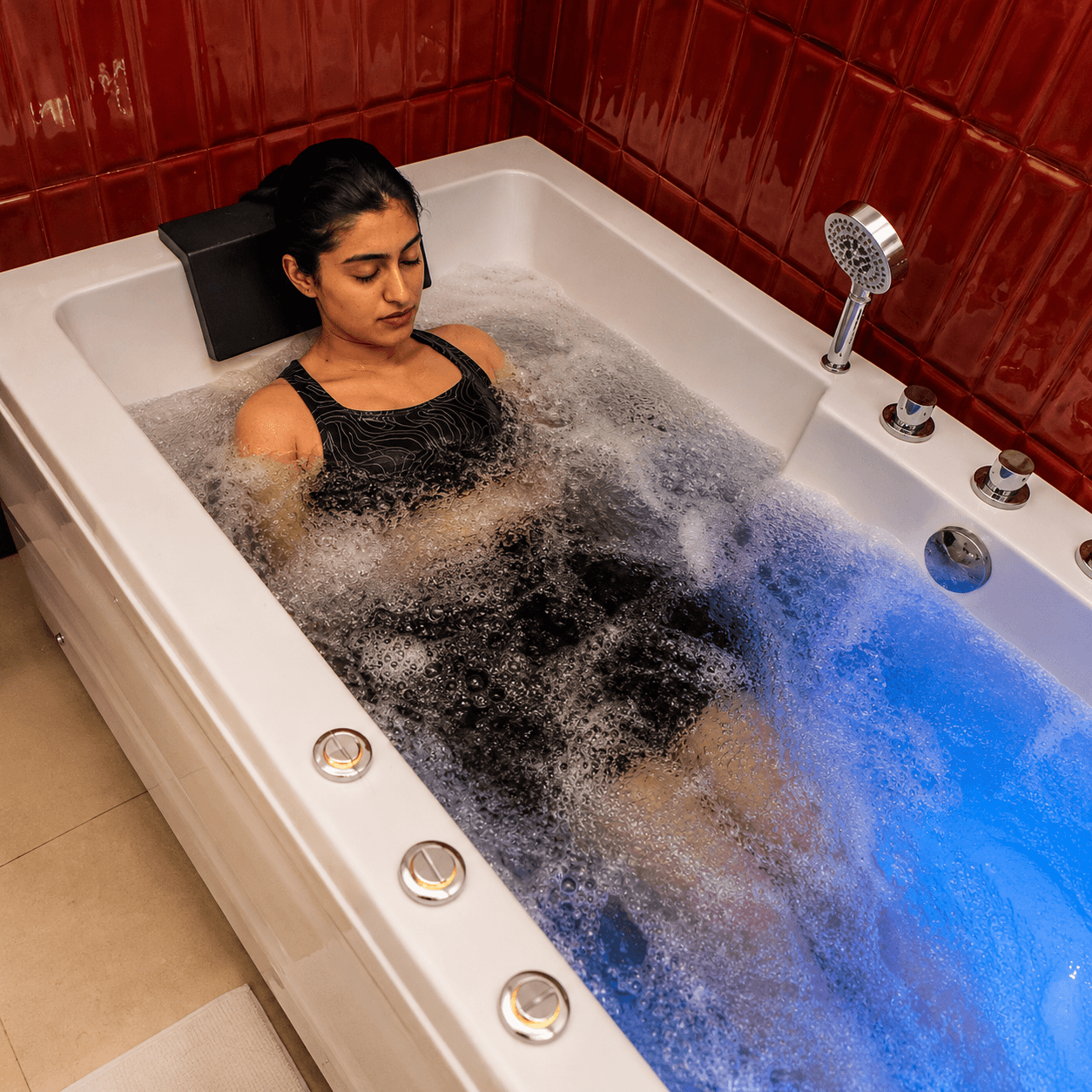
We offer recovery experiences including steam, sauna, ice plunge, hydrotherapy, red light therapy and guided recovery circuits to support recovery and performance.
Is Ember & Ice only for athletes?
Is Ember & Ice only for athletes?
Not at all. Our experiences are designed for athletes, fitness enthusiasts, working professionals, and anyone looking to improve their health, energy, and recovery.
Do I need prior fitness experience to join?
Do I need prior fitness experience to join?
No. Our programs are designed for all fitness levels — from beginners to athletes. Every experience is personalized based on your goals and recovery needs.
Can I book a trial session?
Can I book a trial session?
Absolutely. You can book a consultation or trial session to explore the best training and recovery experience for your goals.
How can I book a session at Ember & Ice?
How can I book a session at Ember & Ice?
You can easily book your session through our website or contact our team directly for guidance and availability.
Your questions.
Answered.
Not sure what to expect? These answers might help you feel more confident as you begin.
What is Ember & Ice?
Ember & Ice is a modern wellness and performance space focused on strength, recovery, and holistic well-being through fitness training and advanced recovery therapies.
What is Ember & Ice?
Ember & Ice is a modern wellness and performance space focused on strength, recovery, and holistic well-being through fitness training and advanced recovery therapies.
What recovery therapies do you offer?
What recovery therapies do you offer?
We offer recovery experiences including steam, sauna, ice plunge, hydrotherapy, red light therapy and guided recovery circuits to support recovery and performance.
Is Ember & Ice only for athletes?
Is Ember & Ice only for athletes?
Not at all. Our experiences are designed for athletes, fitness enthusiasts, working professionals, and anyone looking to improve their health, energy, and recovery.
Do I need prior fitness experience to join?
Do I need prior fitness experience to join?
No. Our programs are designed for all fitness levels — from beginners to athletes. Every experience is personalized based on your goals and recovery needs.
Can I book a trial session?
Can I book a trial session?
Absolutely. You can book a consultation or trial session to explore the best training and recovery experience for your goals.
How can I book a session at Ember & Ice?
How can I book a session at Ember & Ice?
You can easily book your session through our website or contact our team directly for guidance and availability.
Didn’t find your answer? Send us a message — we’ll respond with care and clarity.
Your questions.
Answered.
Not sure what to expect? These answers might help you feel more confident as you begin.
Didn’t find your answer? Send us a message — we’ll respond with care and clarity.
What is Ember & Ice?
Ember & Ice is a modern wellness and performance space focused on strength, recovery, and holistic well-being through fitness training and advanced recovery therapies.
What is Ember & Ice?
Ember & Ice is a modern wellness and performance space focused on strength, recovery, and holistic well-being through fitness training and advanced recovery therapies.
What recovery therapies do you offer?
What recovery therapies do you offer?
We offer recovery experiences including steam, sauna, ice plunge, hydrotherapy, red light therapy and guided recovery circuits to support recovery and performance.
Is Ember & Ice only for athletes?
Is Ember & Ice only for athletes?
Not at all. Our experiences are designed for athletes, fitness enthusiasts, working professionals, and anyone looking to improve their health, energy, and recovery.
Do I need prior fitness experience to join?
Do I need prior fitness experience to join?
No. Our programs are designed for all fitness levels — from beginners to athletes. Every experience is personalized based on your goals and recovery needs.
Can I book a trial session?
Can I book a trial session?
Absolutely. You can book a consultation or trial session to explore the best training and recovery experience for your goals.
How can I book a session at Ember & Ice?
How can I book a session at Ember & Ice?
You can easily book your session through our website or contact our team directly for guidance and availability.